
Texas Hold’em guide

Texas Hold’em, after dark

This is an entry point to Texas Hold’em tournaments in the Fold And Marble Card Room / Poker Salon: an evening that can move from woodfire dining and cocktails into a refined, physical card lounge. The focus is table-based, in-person play—considered, social, and easy to approach one hand at a time.

DinnerCocktailsCard LoungeOffline Poker

A guide for the first hand and the next one: use these pages to understand the structure, vocabulary, and room rhythm before you arrive. It is orientation for an Australian in-person setting, not a replacement for details attached to a particular poker night, tournament, or event. Confirm the practical information for the evening you intend to attend directly with Fold And Marble.

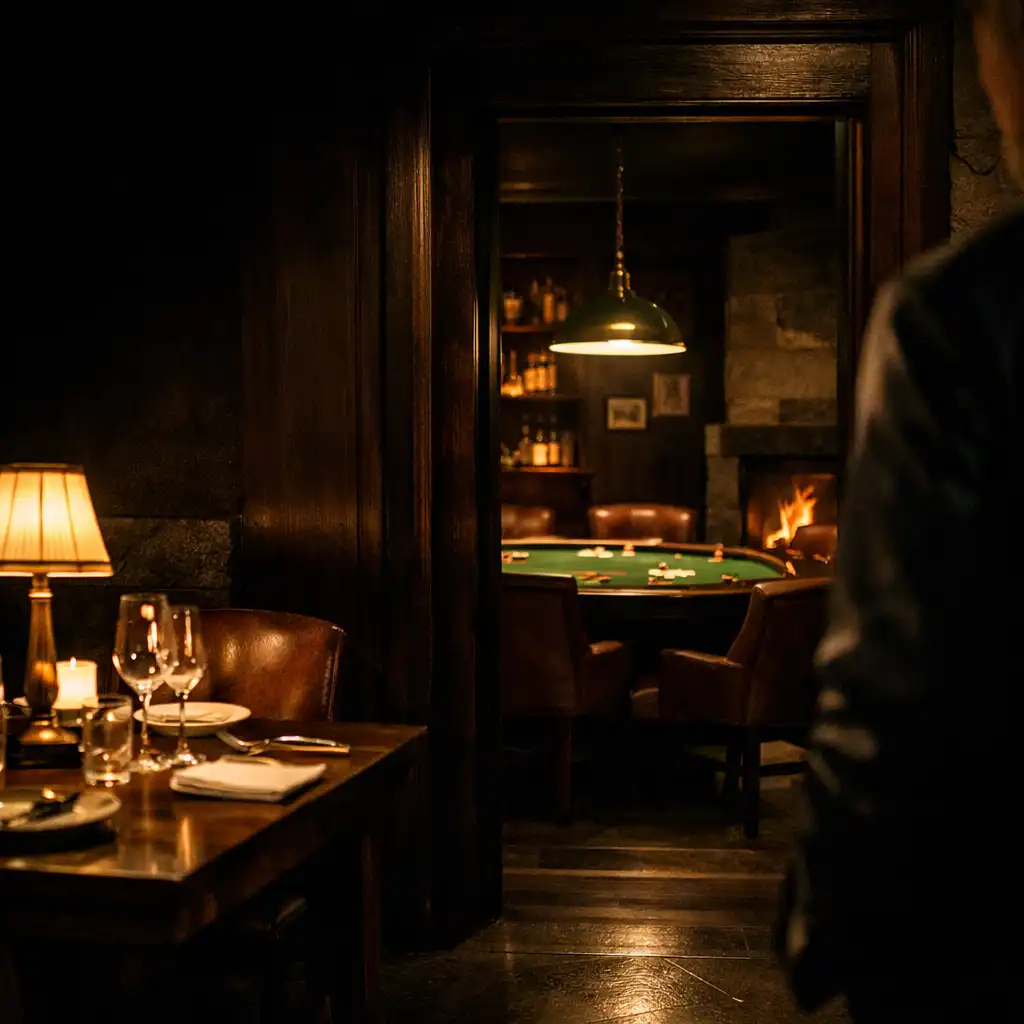
Warm woodfire dining light leading through a dark threshold toward a green felt card table

The tournament

The tournament in one sitting

A Texas Hold’em tournament gives a room of players one shared progression. The details of any occasion can vary, but the broad shape is simple: chips track your standing, blinds keep the table moving, and the field gradually narrows.

01

Every player begins with tournament chips

Tournament chips are the table markers used to show a player’s standing within that particular tournament. They are not cash; they move between players as hands are won and lost. The aim is to protect enough chips to remain in play while finding the moments to commit them. Each hand changes the shape of the table, but no hand promises an outcome.

02

Blinds create the pace

The small blind and big blind are required bets placed in positions relative to the dealer button. They give every hand a reason to begin, rather than allowing everyone to wait indefinitely. In tournament play, blinds generally rise as the occasion progresses, which gradually makes decisions more pressing. The exact structure belongs to the event, but the purpose is always momentum at the physical table.

03

The last player with chips remains

When a player has lost all of their tournament chips, their part in that tournament ends. The remaining players continue as the field narrows, eventually reaching the general tournament milestone known as the final table and then the final outcome. Specific formats can differ from occasion to occasion, so it is worth checking the relevant event information before play. Stay present to the table in front of you.

At the table

How a hand unfolds

Texas Hold’em is built around two private cards, shared community cards, and clear turns to act. The sequence repeats with a steady physical rhythm, making it easier to follow once the key stages have names.

  1. Stage 01

    Receive two private cards

    Each player is dealt two hole cards: cards that belong only to that player and remain private. They are the starting point for every decision, long before the shared cards appear. In a live room, take a quiet moment to look at them, then keep your attention on the action moving around the table.

  2. Stage 02

    Pre-flop — choose whether to continue

    Pre-flop is the first betting round, immediately after the hole cards are dealt. When action reaches you, you may fold, leaving the hand; call, matching the current bet; or raise, increasing it. These are decisions made in turn, so watching who has acted before you is as important as knowing the words themselves. There is no need to rush the sequence.

  3. Stage 03

    The flop, turn, and river reveal the board

    Five community cards are revealed in stages on the board, the shared area of the table available to all remaining players. Three arrive on the flop, one on the turn, and one on the river, with betting rounds between those reveals. The board is shared, but every player’s two private cards create their own possible combination with it.

    Flop · three cardsTurn · one cardRiver · one card
  4. Stage 04

    Showdown determines the hand

    After the final betting round, if more than one player remains, eligible hands are compared at showdown to determine the winner of the pot—the chips contested in that hand. A showdown is not necessary when every other player folds before the end; the remaining player takes the pot. Specific table guidance can be clarified in the room, while this sequence gives you the language to follow what is happening.

Hands placing community cards on deep green felt at an elegant physical poker table
Cards, felt, and live action at the table

A small vocabulary

Words for the room

You do not need to memorise a private language before sitting down. These are the terms most likely to help you hear the live action clearly and understand the shape of a hand.

Action words

Fold
Leave the current hand and take no further part in its action.
Check
Pass action when no bet is required from you in that round.
Call
Match the current bet to remain in the hand.
Bet
Place chips when no prior bet has been made in that round.
Raise
Increase the current bet when action reaches you.

Table landmarks

Dealer button
A marker showing the notional dealer position for the hand.
Blinds
Forced bets placed in positions relative to the button.
Board
The shared community cards revealed in the middle of the table.
Pot
The chips being contested by players in a hand.
Showdown
The comparison of eligible hands at the end of a hand.

Listen before you move

Table language becomes easier when you watch the action in front of you. You do not need every phrase in advance: notice whose turn it is, follow the cards and chips already in play, and ask for clarification at an appropriate pause if a term is unfamiliar.

The room’s rhythm

A physical Card Room moves together

An elegant Card Room / Poker Salon is not only about knowing the hand. It is also about giving each player a clear view of the action, a little room to think, and the same composed attention that carries through the rest of the evening.

01

Follow the action

Watch the current hand and act when it is your turn. This simple habit keeps the pace legible for everyone at the table and makes the physical sequence easier to read. It is courtesy rather than correction: a way to let each decision arrive cleanly, without asking the room to retrace where the action has been.

02

Keep cards and chips considered

Offline poker is tactile and shared. Handle your personal cards discreetly, place chips deliberately, and leave enough visual order for the table to follow the hand. Felt, cards, and chips are part of the room’s material rhythm; treating them with care supports the quiet concentration that makes a salon setting feel composed.

03

Make room for the evening

Good table manners belong to the wider Fold And Marble journey. Dining, cocktails, conversation, and cards can share an evening when each moment receives attention and respect. Whether you are learning Texas Hold’em or returning to familiar play, there is room to take the Card Lounge at a pace that feels right for you.

Measured play leaves space for shared atmosphere.

Fold And Marble, after dark

After dark

Choose the evening that suits you

A tournament is one part of the Fold And Marble card-room story. The offering also makes space for different ways to gather around a physical table, without moving the experience away from the room itself.

In the room

Poker nights and poker events

Poker nights and poker events create occasions to gather around the physical tables, with the shared appeal of the Card Room’s in-person atmosphere and social energy. They belong to a venue experience shaped by conversation, material detail, and live action—not online content. The particulars of each occasion are best confirmed for the evening you have in mind.

At the table

Texas Hold’em tournaments and high roller experiences

Texas Hold’em tournaments provide the structured competitive format described in this guide: a field, tournament chips, blinds, and a progression toward the final players. High roller experiences are also part of Fold And Marble’s wider poker offering for guests seeking a more elevated card-room occasion. Availability and practical details can vary, so this is an invitation to enquire rather than an assurance of access.

One venue, a continuous after-dark journey: Dinner → Cocktails → Card Lounge → Offline Poker. Begin with woodfire dining, continue through cocktails, and arrive at the felt in the same considered evening.

Discover the Card Lounge

Before you take a seat

Arrive prepared, without guessing

The calmest first visit begins with the details that apply to your own evening. A little confirmation leaves more room for the cards, the company, and the progression from dinner to the lounge.

01

Read the event details that apply to your evening

Check the relevant poker-night, tournament, or event information before attending. The format and practical arrangements belong to the specific occasion, rather than to every gathering in the Card Room. Confirm what applies to your visit instead of assuming that one event’s details will carry to the next.

02

Bring the questions that matter to you

A first visit is a good time to seek clarity on the practical points that matter to you: the event format, the arrival process, and any details you would like to understand before taking part. Asking before the first deal is a considered way to arrive, especially when you are new to in-person tournament play.

Ask before the first deal.
03

Let the room set the pace

Texas Hold’em rewards attention. Arrive ready to follow the table, listen to the live action, and enjoy the progression from dining and cocktails into the intimate card lounge at your own pace. The guide’s etiquette notes are simply a foundation for confidence, not a demand for strategy or perfection.

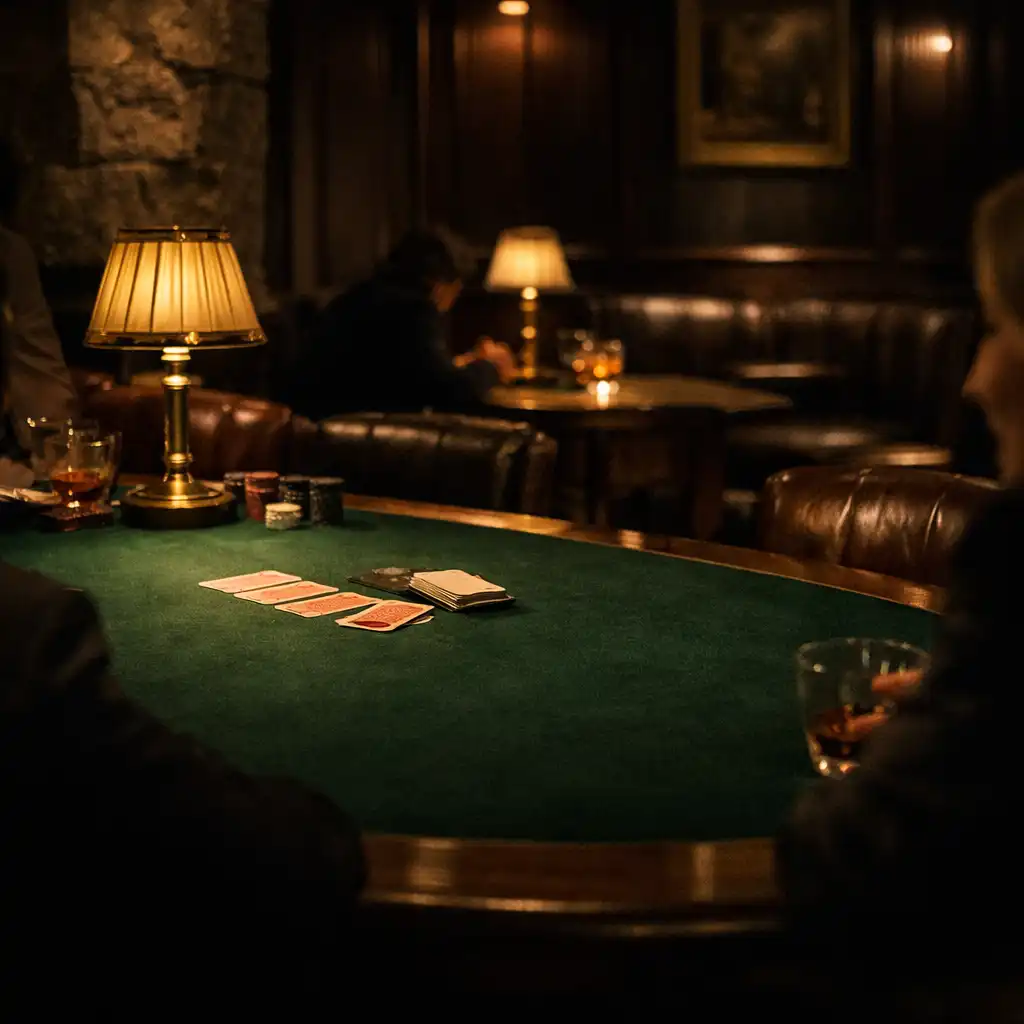
Late-night card salon with green felt, warm lamps, dark timber and leather seating

The room

A table lit for conversation and concentration

Fold And Marble’s Card Room / Poker Salon is an intimate continuation of the restaurant’s after-dark atmosphere. Green felt, tactile cards and chips, measured conversation, and low warm light give the room its focus. It is a physical destination where dining and cocktails can settle naturally into an evening at the table—refined, attentive, and grounded in the shared presence of the people around it.

Visit the Card Lounge

A considered next step

Continue into the Card Lounge

Explore the broader Fold And Marble in-person poker setting, or contact the venue with questions about the visit you have in mind. Both paths keep the next step clear without presuming tournament entry, availability, or a particular arrangement.

Guide note

This guide is a general introduction to Texas Hold’em tournament play. Confirm the details relevant to the poker night, tournament, or event you intend to attend with Fold And Marble.